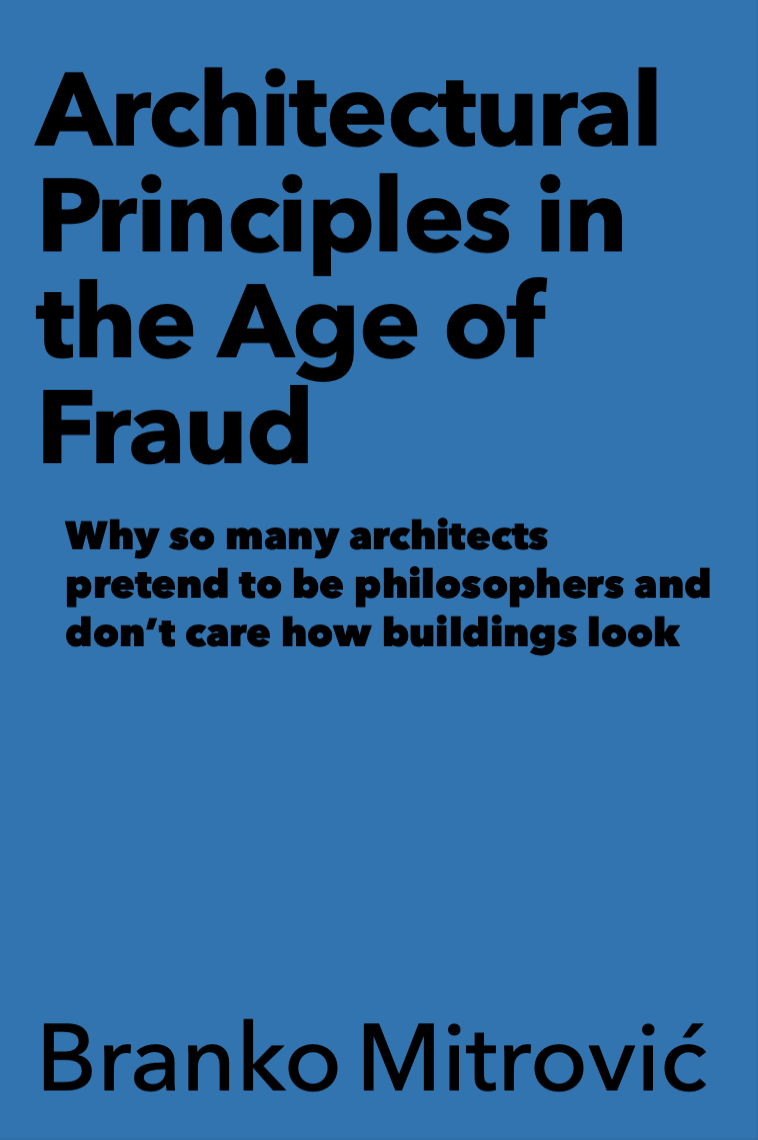
Architectural Principles in the Age of Fraud
- Branko Mitrović
- San Francisco: Oro Books, 2022.
The book describes and examines the widespread (mis)use of philosophy, philosophical arguments and terminology in architectural writings and debates in the period 1920- 2020. For the past hundred years architects and architectural academics have extensively employed, often without much understanding, works and views of philosophers in their theorizing and discussions. The core thesis of the book is that this widespread misemployment of philosophy—appropriations that clearly indicate the poor understanding of philosophical sources, the miscomprehension of philosophical arguments or conceptual distinctions on which they rely, the use of philosophical phrases without content or straightforward attempts to bamboozle readers, colleagues and the general public with philosophical terminology—is not accidental but systematically reflects the position of the architectural profession and academia within society, and especially the widespread recognition of the failure of Modernism and the open rejection of modernist architecture by the general public. In the final decades of the twentieth century philosophy-based obfuscation came to dominate architectural writings and starting with the 1970s one can talk about the rise of the Obfuscatory Turn in architectural theory. The book argues that the Obfuscatory Turn was the reaction of the architectural profession and academia to the rejection of Modernism by the general public, in the situation in which they were unable to step out of their modernist commitments.