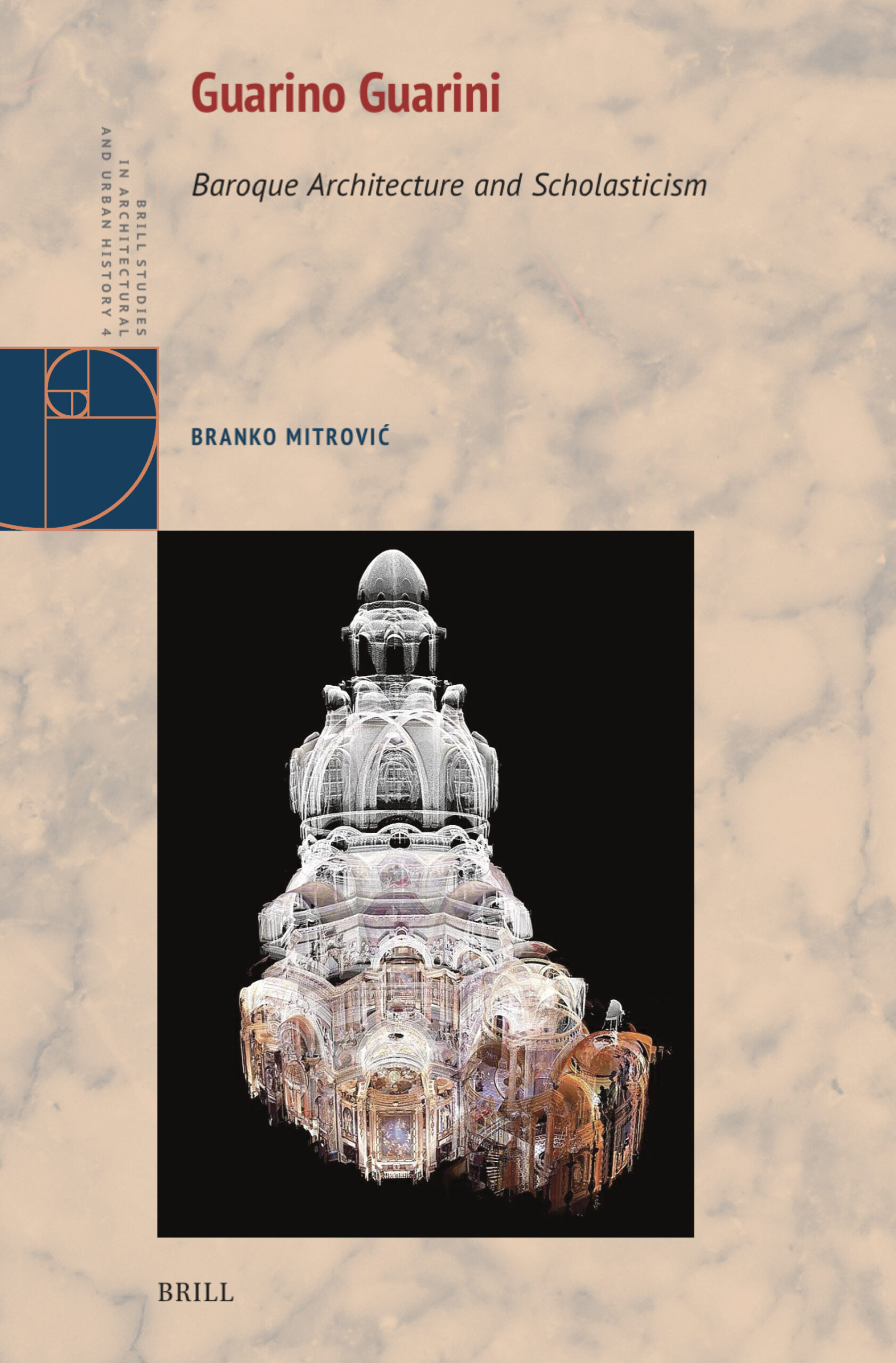
- Branko Mitrović
- Leiden: Brill, 2025.
- Guarino Guarini (1624-1683) is today best known as one of the most prominent architects of the Italian Baroque. However, unlike other major Baroque architects, Guarini was also a polymath who published voluminous treatises on astronomy, mathematics, philosophy and architecture and lectured on philosophy and theology at various educational institutions of the Theatine order to which he belonged. The monograph concentrates on the implications of Guarini’s philosophical views for his architectural theory. The core document for the study of his worldview is his massive philosophical treatise Placita philosophica. In an earlier article I have managed to establish that the book belongs to an entire genre of seventeenth century philosophical books that all share the same structure, the order of topics and survey Aristotelian scholastic philosophy. While it was written as a philosophical treatise, Placita also presents comprehensive perspectives on core problems of architectural theory, such as space and place, the functioning of perception and spatial thinking, the role of human cognition in the attribution of aesthetic properties, symbolism and meanings in architecture and so on. The book is thus a systematic analysis of Gurini’s theoretical views on architecture in the context of his philosophical worldview.
-
Views: 112
- Tor Egil Førland and Branko Mitrović (co-editors)
- Lanham: Lexington 2023. (Open access)
- The book presents a series of articles that challenge anti-realist perspectives in philosophy of history: “Introduction” by Tor Egil Førland and Branko Mitrović. “Idealism and Historical Theory” by Adam Timmins. “A Deceiving Resemblance: Realism Debates in Philosophy of Science and Philosophy of Historiography” by Veli Virmajoki. “Historical Accuracy and Historians’ Objectivity” by Branko Mitrović. “Historiography beyond Partisanship: Establishing Facts and Evaluating Theories” by Tor Egil Førland. “Irrealism and Historical Theory: A User’s Guide” by Adam Timmins. “Saving Historical Reality (Even if We Construct It)” by David Weberman. “Is Historical Anti-realism (Ever) Politically Progressive?” by Ian Verstegen. “Postmodern Frankenstein: or, the Alternative Facts Monster” by Tor Egil Førland. “Arguments, Partisanship and Politics: Is Anti-realism in the Philosophy of History a Right-Wing Ideology?” by Branko Mitrović.
- Branko Mitrović
- San Francisco: Oro Books, 2022.
- The book describes and examines the widespread (mis)use of philosophy, philosophical arguments and terminology in architectural writings and debates in the period 1920- 2020. For the past hundred years architects and architectural academics have extensively employed, often without much understanding, works and views of philosophers in their theorizing and discussions. The core thesis of the book is that this widespread misemployment of philosophy—appropriations that clearly indicate the poor understanding of philosophical sources, the miscomprehension of philosophical arguments or conceptual distinctions on which they rely, the use of philosophical phrases without content or straightforward attempts to bamboozle readers, colleagues and the general public with philosophical terminology—is not accidental but systematically reflects the position of the architectural profession and academia within society, and especially the widespread recognition of the failure of Modernism and the open rejection of modernist architecture by the general public. In the final decades of the twentieth century philosophy-based obfuscation came to dominate architectural writings and starting with the 1970s one can talk about the rise of the Obfuscatory Turn in architectural theory. The book argues that the Obfuscatory Turn was the reaction of the architectural profession and academia to the rejection of Modernism by the general public, in the situation in which they were unable to step out of their modernist commitments.
- Branko Mitrović
- Lanham: Lexington, 2020.
- This book presents a systematic survey of the implications of materialism (or physicalism or naturalism) for research in history and historical humanities. By ‘materialism’ one should understand here the view that everything is physical—that the world consists of elements that physics describes, such as elementary particles, fields, forces, space, time, but nothing else. Mental states, on this account, are biological phenomena, biological phenomena are chemical, and chemical phenomena are physical. In philosophy, there is a long-standing debate about physicalism; outside philosophy, the view that everything is physical is exceptionally widespread in some cultural contexts, and it is probably endorsed by most practicing historians, at least in the English speaking world. At the same time, the materialist (physicalist, naturalist) understanding of how the world works has an exceptionally wide range of implications for historical research and its methodology that have never been systematically analysed in contemporary philosophy of history. Generally speaking, the most important of these implications is the assumption that abstract, immaterial or spiritual substances, forces or phenomena are non-existent and therefore could not have participated in human history. Obviously, few historians today rely on spiritual substances or their own religious views when describing and explaining historical events. Nevertheless, one often reads in contemporary historical writings descriptions or explanations that rely on communities, cultures, history, discourses, and so on that are understood as abstract or immaterial forces with causal capacities that they could not have if the world consisted purely of physical elements. Questions about the ontology and the causal capacities of historical and social entities, forces, or phenomena directly relate to questions about their ability to affect, determine, and ultimately explain historical events and the acting of historical figures. As a result, they directly pertain to more specific methodological questions. For instance, can there be historical or social forces that are something other than (systematic) interactions among individuals? In what ways can historical contexts affect or cause decisions and actions of historical figures? What about their mental states and beliefs? When can a historian claim that certain views were inconceivable to members of certain historical communities? The materialist paradigm precludes the possibility that the contents of the mental states of historical figures could have abstract immaterial existence, and this has wide-ranging consequences for the way historians can attribute beliefs or concepts to historical figures, as well as for the understanding, interpretation, and translation of documents. Finally, materialism has direct consequences for the well-established debate between realism and constructionism in the philosophy of history and the dilemma about the transparency versus opacity of historical narratives.
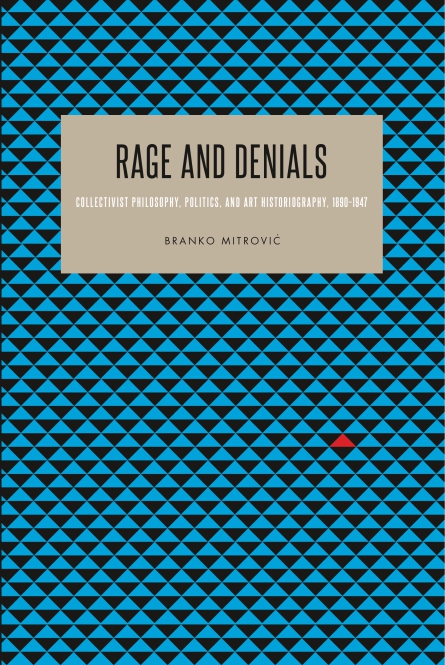
- Branko Mitrović
- University Park: Penn State University Press, 2015.
- According to one view, collective entities such as cultures or nations are irreducible to the individuals that constitute them; they are to be conceived of as forces in their own right, while the intellectual lives and creativity of participating individuals are mere manifestations of their membership of such groups. According to the opposing view, collective entities are but joint names for sets of individuals and their interactions, while the influence that the social environment exercises on an individual’s creativity can always be described in terms of interaction with other individuals. The dilemma between these two opposing views is impossible to avoid in historiography or social science. This book describes the history of the debate between the collectivist and individualist understanding of social phenomena in German-speaking context during the period 1890-1947 with a particular emphasis on art history writing. The complex functioning of human visuality produces a particularly wide spectrum of possible approaches to the understanding of human creativity in the visual arts and results in a diversity of historiographical approaches whose implications often by far exceed the field of art history. Human visuality in particular can be believed to result from an individual’s membership in a group such as culture or ethnicity or, alternatively, to derive from cognitive capacities shared by the entire species—a dilemma that necessarily produces very different methodological models in art history. In their turn, the book argues, these models and their reception cannot be separated from wider political and social agendas as well as their capacity to satisfy the self-esteem regulation needs of historians and their public.
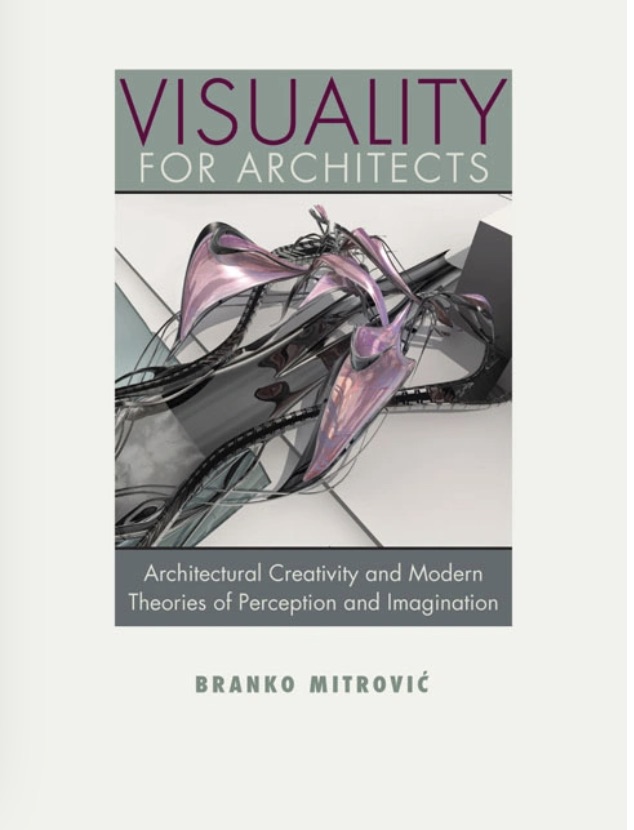
- Branko Mitrović
- Charlottesville: University of Virginia Press, 2013.
- Contemporary architectural practice, theory and especially architectural education are still dominated by obsolete psychological theories according to which perception is inseparable from the classification of the objects perceived–they rely on the assumptions that “there is no innocent eye” and that “all seeing is seeing as”. These misconceptions permeate architectural debates, result in the suppression of formal-visual concerns for the built environment and are clearly manifested whenever discussion of formal-visual qualities of architectural works is subsumed under the discussion of ideas associated with these works. At the same time, in opposition to these old views, modern psychology and philosophy of perception recognise that perceptual contents are non-conceptual and that perceiving is impenetrable for conceptual thinking (such as the ideas associated with architectural works). The aim of the book is to present these more contemporary theories of perception to the public of architects, architecture academics and students.
- Branko Mitrović
- New York: Princeton Architectural Press, 2011.
- The intention of of the book is to provide a clearly written and easy to grasp introduction to philosophical questions and works of great of philosophers for architecture students and in the form that is relevant for contemporary teaching of architectural theory. The book has the form of a general survey of the history of philosophy, but it treats only the topics which are relevant for architectural theory and are typically discussed in architectural theory courses. Among others, topics include Aristotle’s theory of visual imagination and its relevance to digital design, Hegelian theories of Zeitgeist, Kant’s examination of space and aesthetics, phenomenology, deconstruction and so on.
-
Views: 120
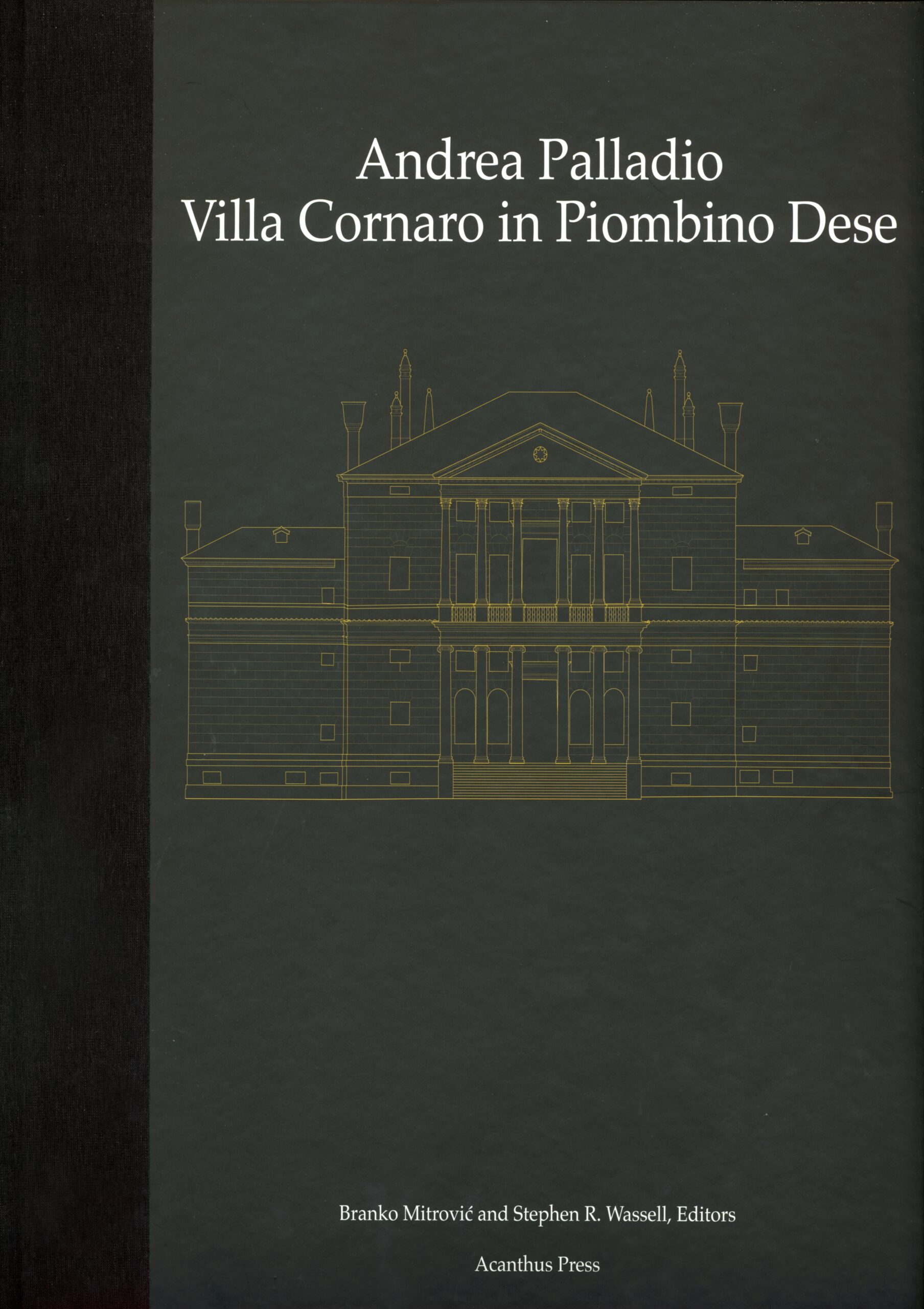
- Branko Mitrovic, Stephen Wassell, Melanie Bourke and Tim Ross
- New York: Acanthus Press, 2006.
- The book presents a survey and an analysis of Andrea Palladio’s villa Cornaro in Piombino Dese.
-
Views: 101
- Branko Mitrović
- Berlin: Deutscher Kunstverlag 2005.
- The book analyses the philosophical background of Leon Battista Alberti’s architectural theory. It systematicaly surveys Alberti’s use of his technical terms (lineamenta, concinnitas, spatium, ornamentum, etc.) and analyses their meaning in the context of Aristotelian worldview in which Alberti was educated. The first three chapters discuss Alberti’s use of the term “lineamenta” and show that in all contexts in which the word appears in Alberti’s treatise De re aedificatoria, it can be translated as “shape”. It is also pointed out that the Aristotelian context in which Alberti worked prevented him from using words such as “forma” or “figura”. Chapter Four deals with Alberti’s concept of space. Chapter Five discusses Alberti’s views on beauty and argues for a formalist reading of his architectural theory. It also presents systematic analyses of Alberti’s technical terms such as concinnitas and ornamentum. Chapter Six explains, why anachronistic approaches to Alberti, based on the twentieth-century assumption that architecture conveys “meanings” and the idea that architecture represents the human body, fail to provide comprehensive understanding of Alberti’s architectural theory. Chapter Seven deals with Alberti’s views on cognitive psychology that underwrite his conception of aesthetic preference.
-
Views: 109
- Branko Mitrović
- New York: Norton 2004.
- The book is a study of Andrea Palladio’s design theory, and addresses topics such as Palladio’s use of proportions, classical orders, his approach to spatial composition, facade design, the Platonist theoretical framework of his approach to design. It is written students and practitioners of classical architecture.
- Giacomo Barozzi da Vignola and Branko Mitrović
- New York: Acanthus Press, 1999.
- My translation of and commentary on Giacomo Barozzi da Vignola’s Regola delli cinque ordini.